

Kurate Town Hall acquires both Nearly ZEB certification and CASBEE Wellness Office S-Rank certification
Our design for the Katate Town Hall (Fukuoka Prefecture), crafted by AXS Satow, has achieved both Nearly ZEB and CASBEE Wellness Office S Rank certifications.
This is the first case in Japan where a public facility has acquired both of these certifications (as of April 2024, according to our research).
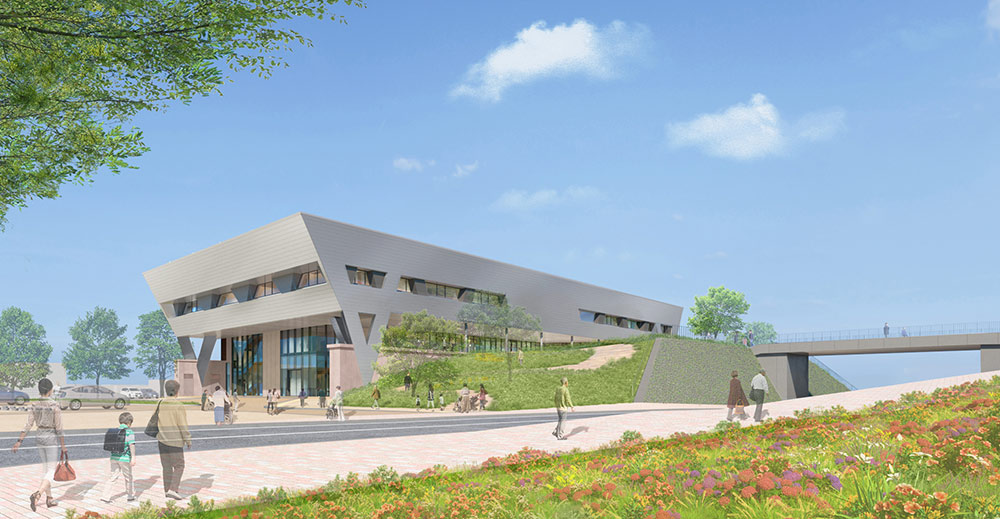
To maintain and improve administrative services for the future, Kurate Town is advancing compact town development by relocating its town hall to the central area of the town—where the central public hall, gymnasium, and hospital are concentrated—and connecting public facilities to enhance convenience. In addition, Kurate Town has declared a "Zero Carbon City" aiming to reduce carbon dioxide emissions to net-zero by 2050. Based on this declaration, the new town hall was planned with a target of achieving Nearly ZEB status from the proposal stage.
With the mindset of becoming an environmentally friendly town hall that leads the era to come, we aimed not only to achieve Nearly ZEB, but also to improve the wellness (comfort, health, and intellectual productivity) of users (staff and town residents) and serve as a BCP hub for the entire region.
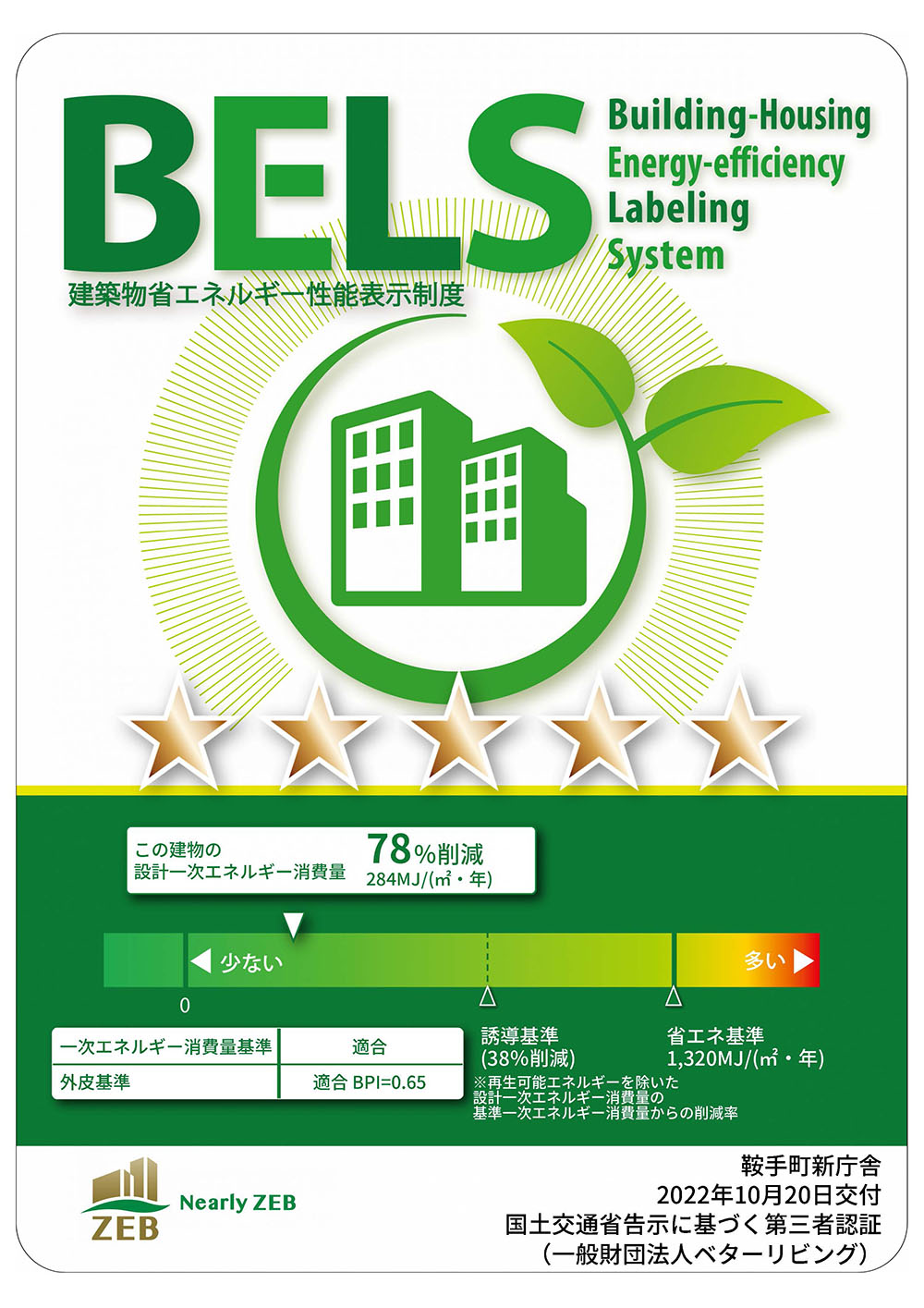
Obtained BELS certification for Nearly ZEB
The primary energy consumption reduction rate was 78% (energy saving: 53%, energy creation: 25%), and the BEI value was 0.22. As of April 2024, there are only 5 government buildings, including the Kurate Town Hall, that have acquired Nearly ZEB BELS certification.
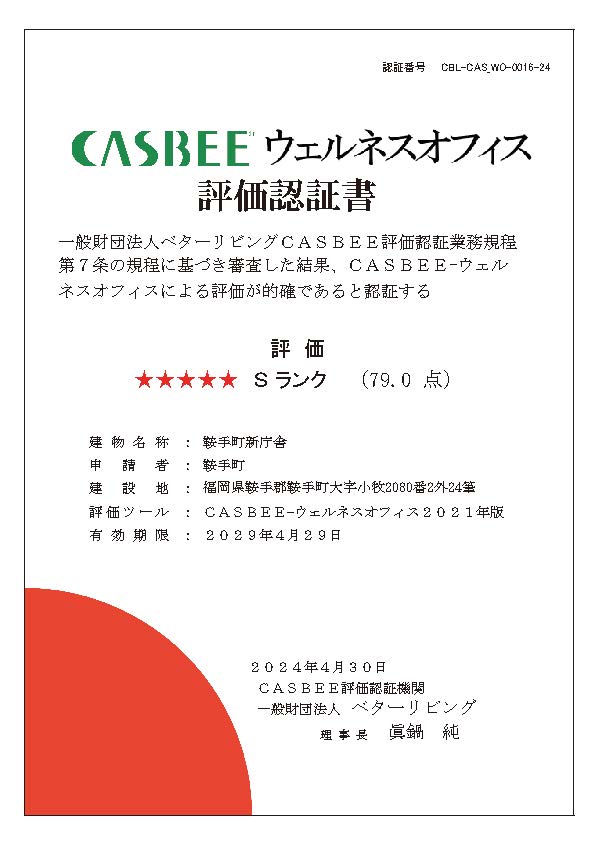
Achieved CASBEE Wellness Office S Rank
In the design, we achieved a high level of wellness by balancing considerations such as health, comfort, safety, and security. In addition, this is the first government building in Japan to achieve both Nearly ZEB and CASBEE Wellness Office S-Rank certifications (as of April 2024, according to our research).
Selected for the Resilience-Enhanced ZEB Demonstration Project
Our project has been selected for the "Resilience-Enhanced ZEB Demonstration Project" under the Ministry of the Environment's FY2022 "Program to Promote Decarbonization and Resilience Strengthening for Buildings and Other Facilities." By achieving "Nearly ZEB," the subsidy rate for eligible construction costs has been set at 3/5.
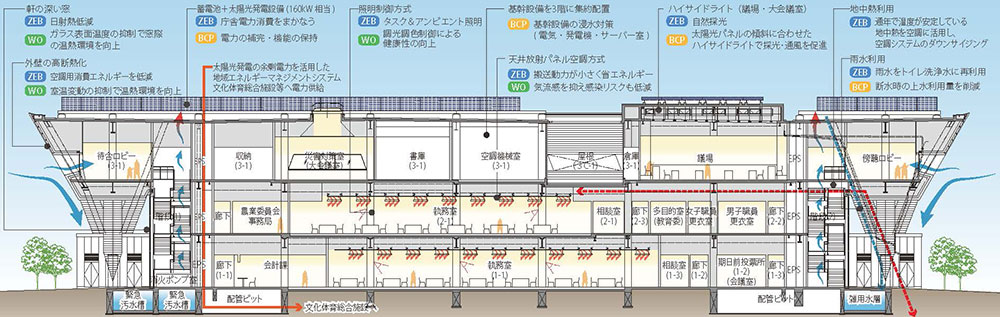
The Kurate Town Hall was designed using various methods with the goal of becoming an environmentally friendly building.
A form that achieves both high building envelope performance and an open space
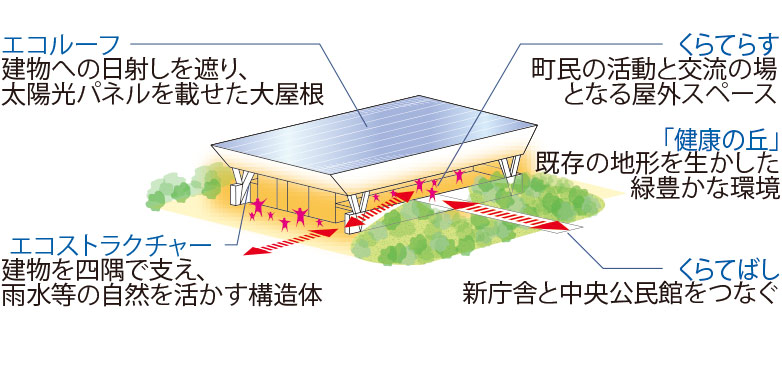
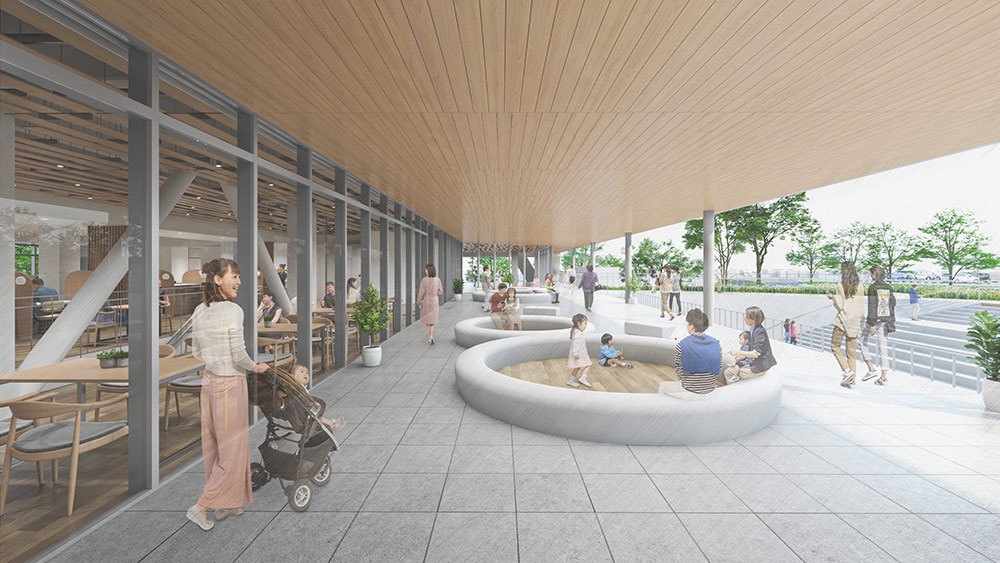
An "Eco-Roof" has been installed on the third floor with deeply projecting eaves to significantly reduce solar heat gain. Furthermore, enhanced thermal insulation improves the building envelope performance and reduces the air conditioning load. The shared areas and offices on the first and second floors feature open spaces with a ceiling height (CH) of 3.0 meters or more, while curtain walls provide clear views and create a wellness-focused environment where people can feel the surrounding greenery.
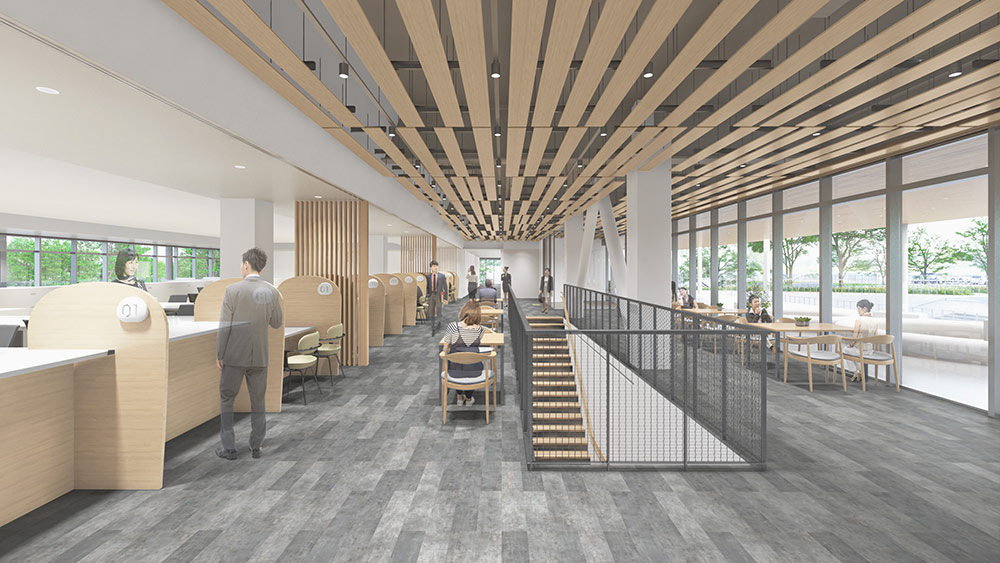
radiant ceiling panel cooling and heating system and wirelessly controllable task-ambient lighting
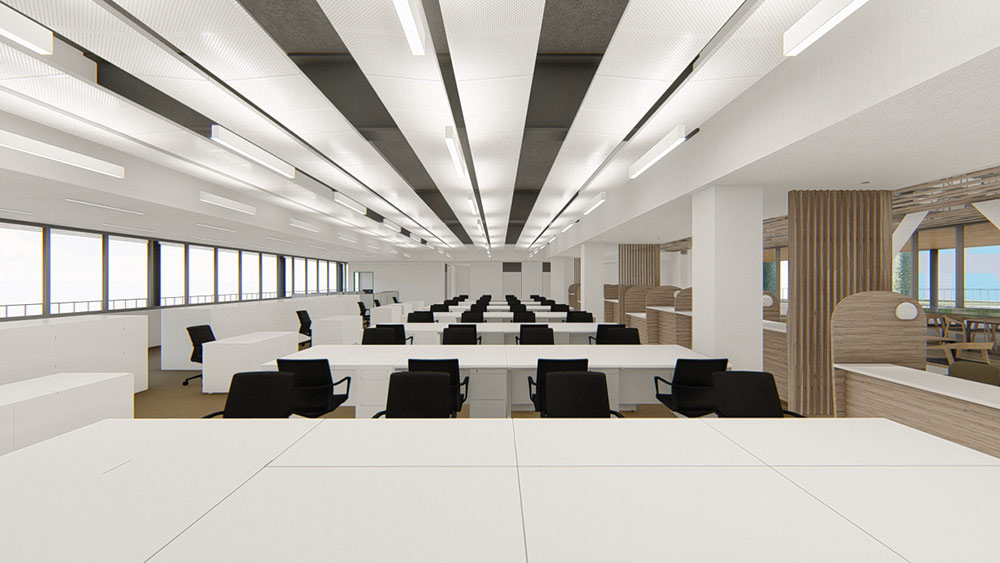
Energy saving is achieved through a ceiling radiant heating and cooling system with low transport power. A comfortable thermal environment is created by the radiation effect, enhancing wellness. Geothermal heat, supplied through the "Eco-Structure" structural system, is also utilized as a heat source. For lighting, an integrated mechanical and electrical design was adopted, where upward light illuminates the radiant panels to ensure a sense of brightness. In addition, illuminance and color temperature are controlled in accordance with the biological rhythm, aiming to improve wellness (intellectual productivity) in addition to power-saving effects.
Radiant heating and cooling, along with a comfortable, unidirectional airflow, enhance comfort while reducing the risk of infection, and the lower lighting distribution can be wirelessly dimmable and color-tuned on demand from tablets carried by staff.
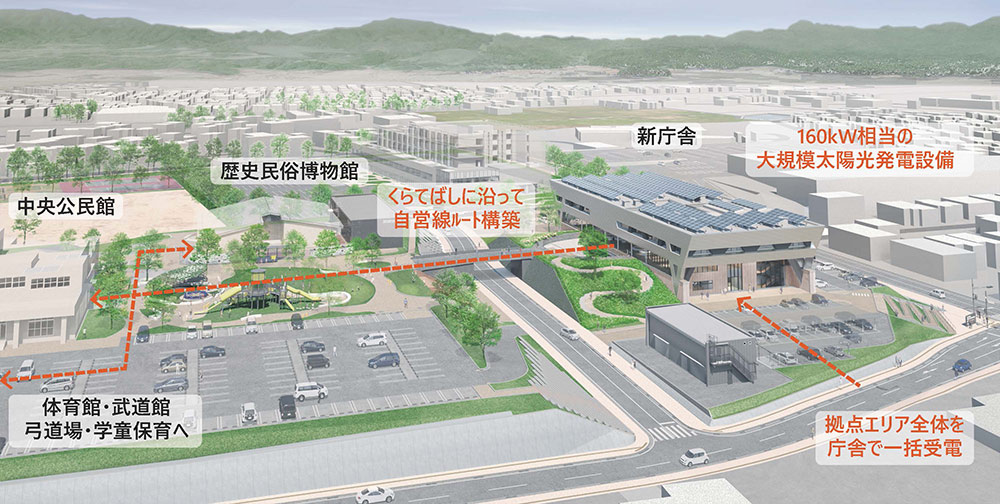
Construction of a regional EMS centered on solar power generation facilities
In collaboration with Kyushu Electric Power, we will implement bulk power reception, including the installation of storage batteries and surrounding facilities on a separate site. This will utilize surplus solar power to improve energy efficiency across the entire district.
In the event of a disaster, power can also be supplied from the main building to evacuation facilities, contributing to the enhancement of the resilience functions of the entire region.
Future initiatives
After completion (scheduled for October 2024), we will collaborate with research institutions such as universities to monitor primary energy consumption and the operating status of various systems, formulate operation improvement plans, and promote ongoing energy management. In the future, we aim to realize a "ZEB" (Net ZEB) building by augmenting energy-creation facilities.